

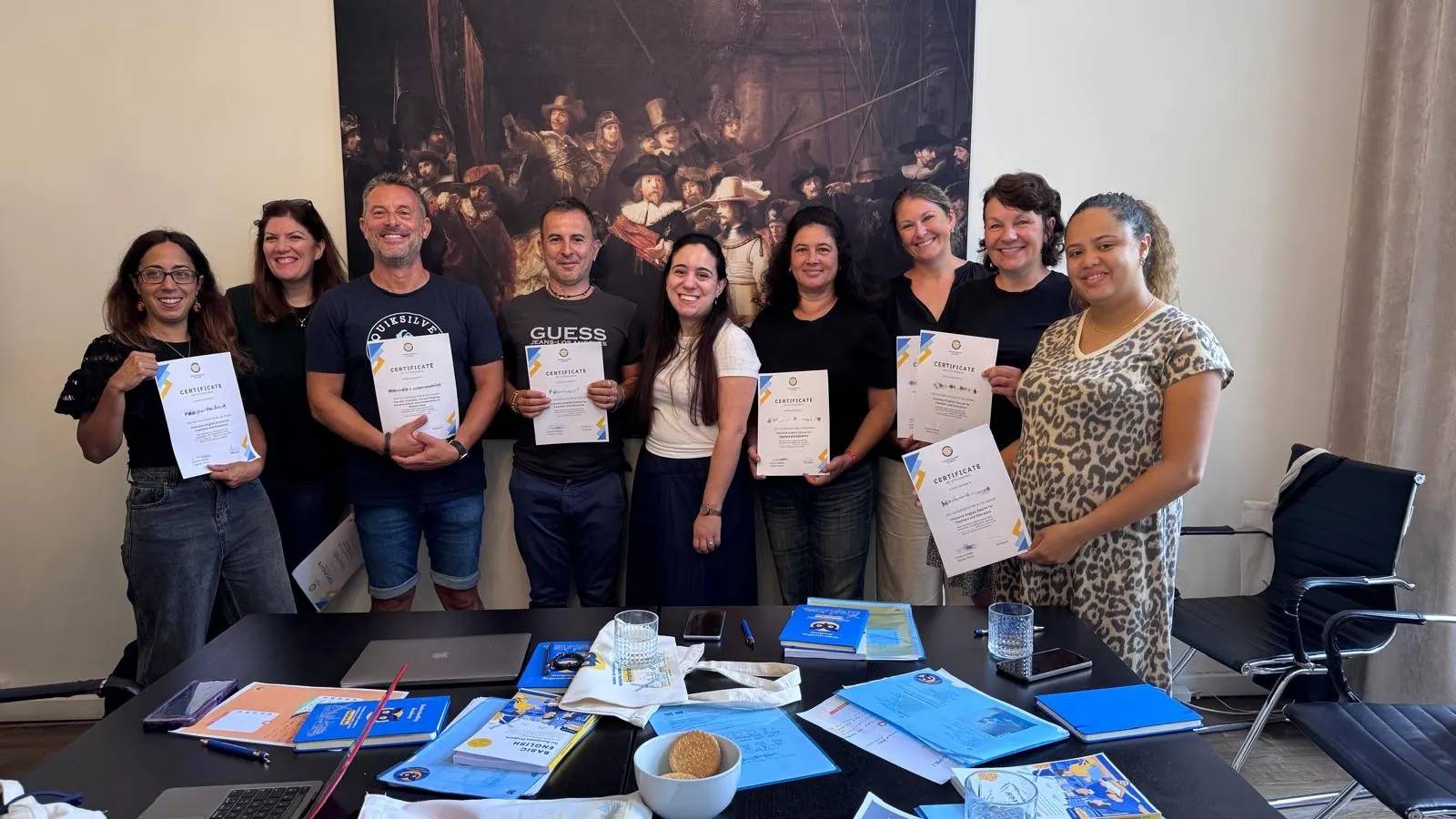
During the week beginning 27 July 2026, Understanding Academy welcomed teachers and educators to Amsterdam for an Intensive English Language Course focused on communication, confidence and the practical use of English. Rather than treating language as a collection of grammar rules, the programme invited participants to speak, collaborate, experiment and reflect. Amsterdam was not simply the location of the course. It became part of the learning experience itself.
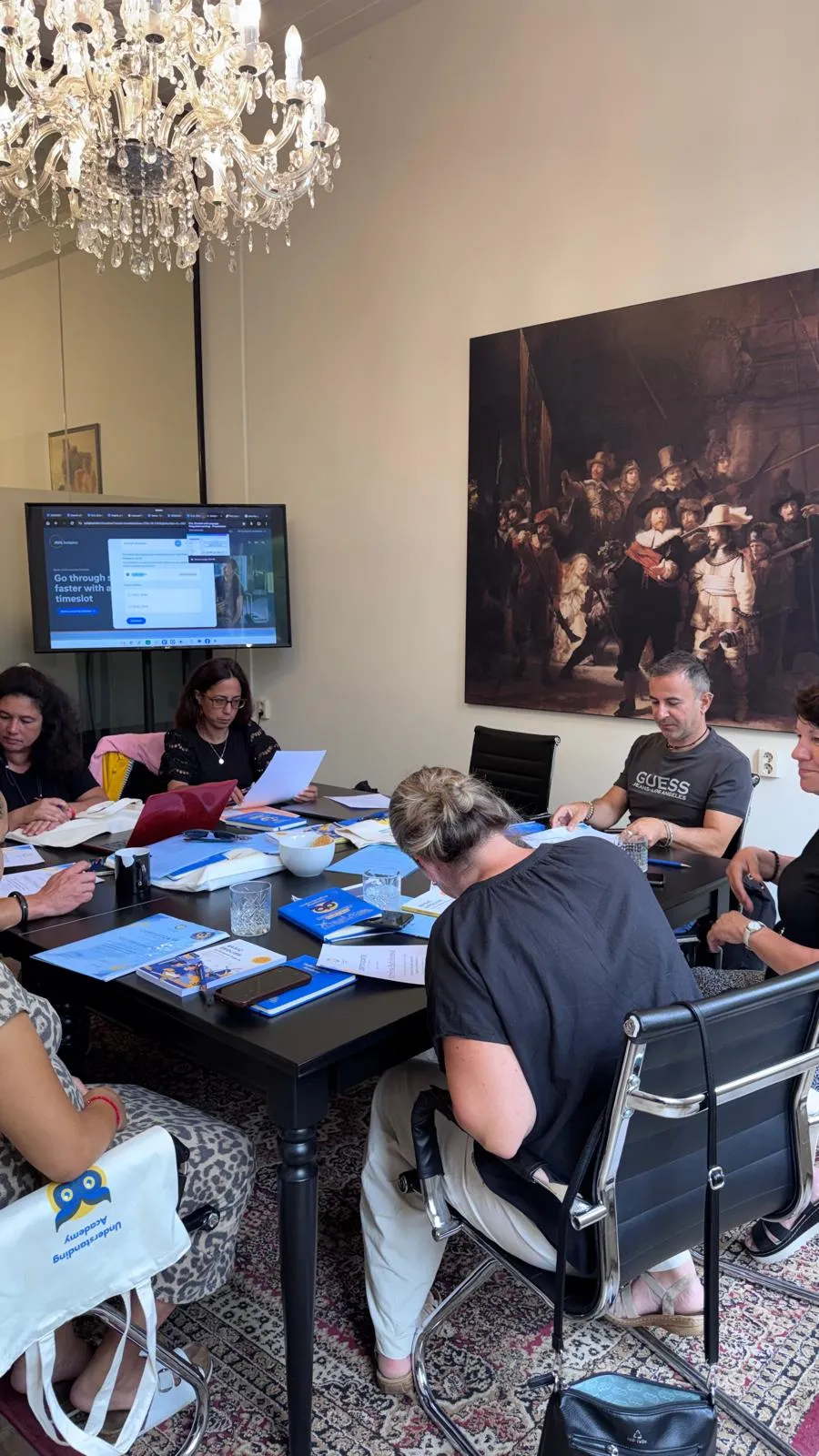
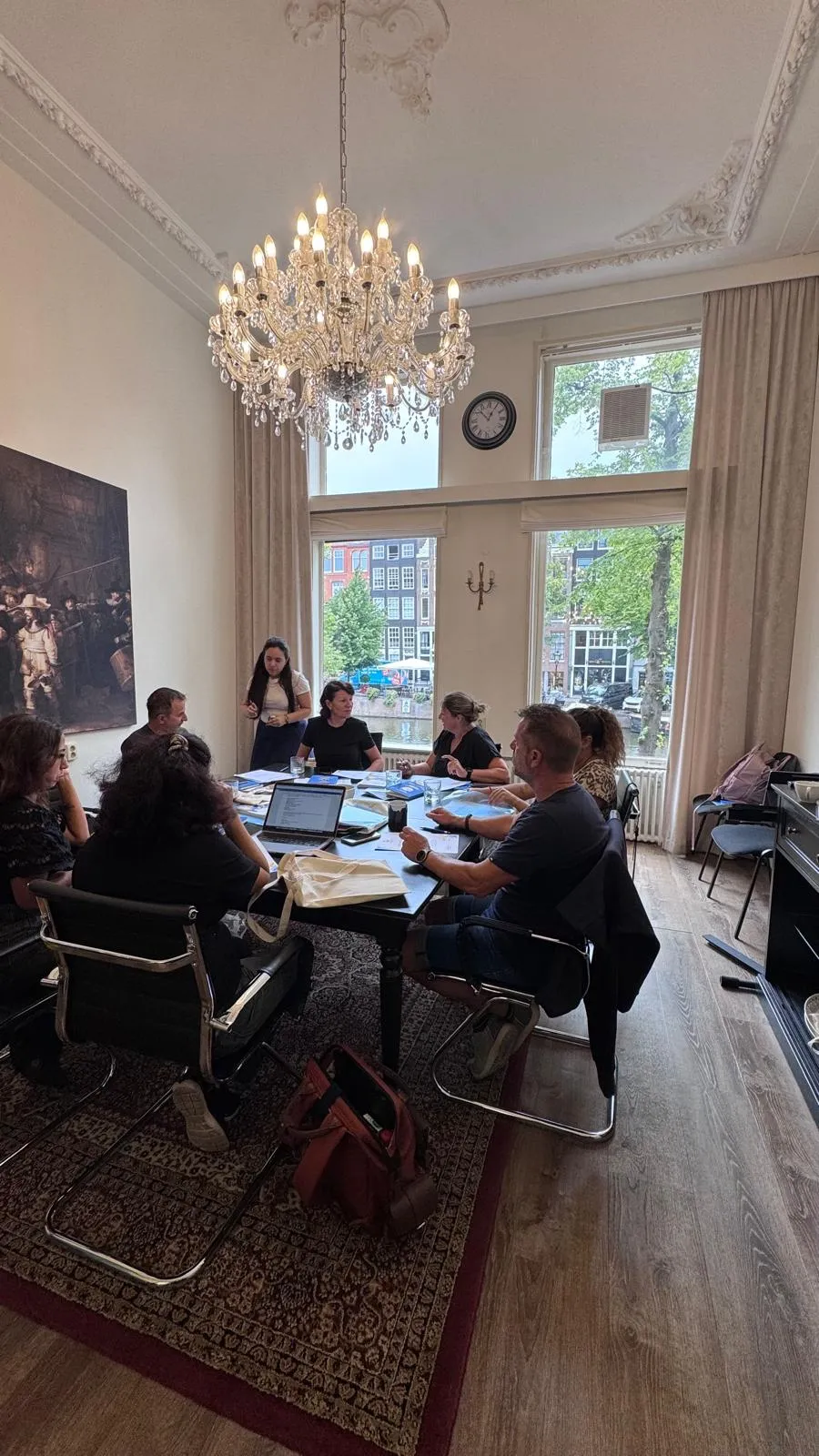
From the first morning, we created a supportive atmosphere in which everyone could participate at their own level. Icebreakers, school presentations and guided conversations helped participants get to know one another and begin working as a team. They introduced their professional contexts, shared their experiences with English and discussed the challenges they face when communicating internationally.
The goal was not to speak perfect English. Instead, participants were encouraged to communicate meaningfully, try new expressions and become more confident step by step. The international composition of the group also created opportunities for professional exchange. Participants compared their schools, explored possibilities for collaboration and considered how cultural differences might influence a European project.
English therefore became more than a subject to study. It became a practical tool for connecting people, ideas and educational institutions.
Amsterdam as an Extended Classroom
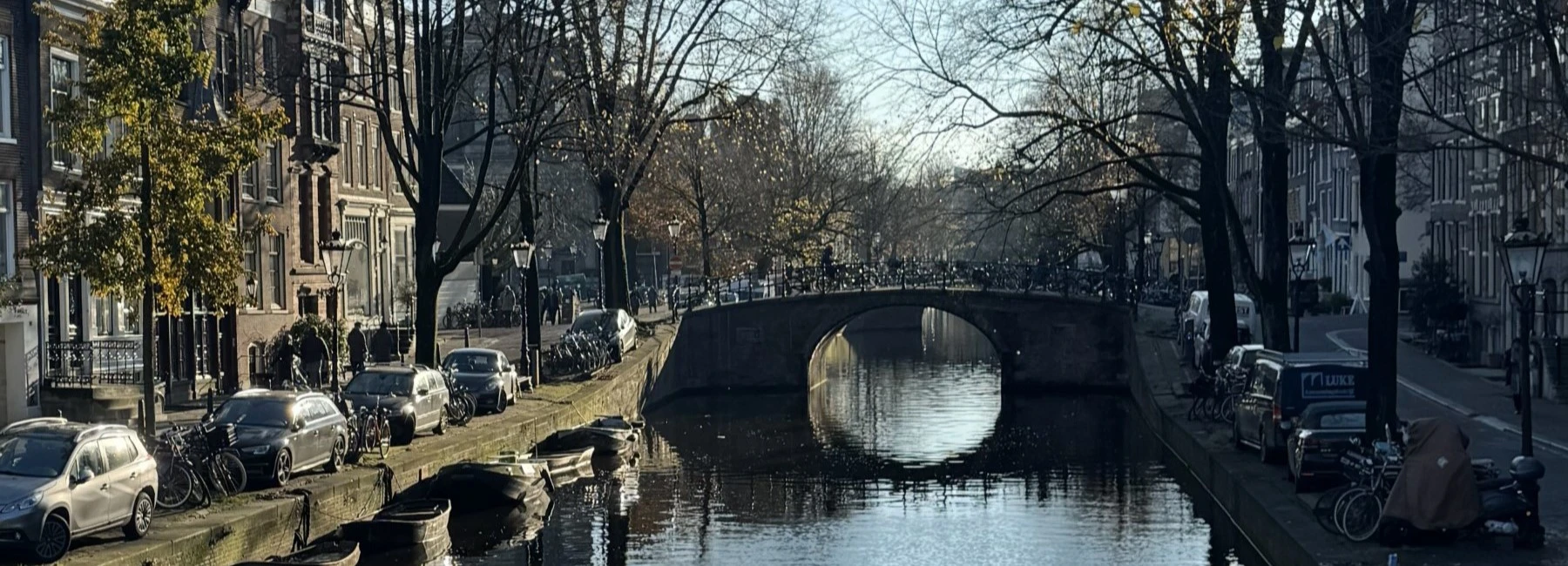
One of the central features of the week was the integration of Amsterdam into the course. Participants learned about the city, its history, canals, neighbourhoods and cultural identity. They used English to talk about places they had visited, ask for recommendations and share their impressions of life in the Netherlands.
The course materials introduced Amsterdam’s origins, its historic canal ring and some of the characteristics that make the city so recognisable.
The city provided authentic material for speaking and vocabulary practice. We discussed public transport, museums, local food, directions and cultural experiences. These topics gave participants useful language they could apply immediately outside the classroom.
A simple conversation about Amsterdam could lead to work on pronunciation, storytelling, question formation, descriptive language or cultural comparison. Participants could describe a place they had discovered, explain how to reach it or recommend an activity to the rest of the group.
This connection between the classroom and the city made the learning more memorable. When participants later walked along a canal, visited a museum, ordered something in a café or asked someone for information, they could recognise and use language practised during the course.
Amsterdam became a place to observe, communicate and learn.
Exploring the Dutch Masters
Art played an important role in the programme. Participants worked with famous paintings by the Dutch Masters, using visual observation as a starting point for language, interpretation and creativity.
Paintings offered an accessible way to practise speaking because everyone could notice something, ask a question or suggest an explanation. Participants did not need specialist knowledge of art history to contribute. They could begin by describing what they saw.
The group discussed people, objects, clothing, actions, colours and emotions. They imagined what might have happened before the moment represented in a painting and what could happen next. They considered the relationships between the figures, invented dialogue and explored why the artist might have chosen to preserve that particular scene.
In this way, a painting could become a vocabulary activity, a storytelling prompt, a role-play or a conversation about everyday life. Participants could also examine the different interpretations that emerged within the group. The same image did not produce only one correct answer. It encouraged curiosity, careful observation and respectful discussion.
Works connected to the Rijksmuseum, including Rembrandt’s The Night Watch, helped link the classroom activities to Amsterdam’s cultural landscape. The course materials also introduced the museum’s library, gardens and collection, encouraging participants to continue exploring independently.
Working with art demonstrated an approach that participants could take back to their own classrooms. A painting does not need to be used only in an art or history lesson. It can support language development, observation, critical thinking, empathy, storytelling and imagination.
Learning Through Games
The week included plenty of games and interactive challenges. Some activities, supported by our Mystery Object interactive app, asked participants to talk about a randomly selected object in pairs or small groups. Others invited them to guess a country by asking questions, teach the group something connected to their culture or respond to practical situations.
We also used movement, images and playful prompts to review previous learning. Participants might represent something they remembered through a movement or choose an emoji that captured their experience of the previous day.
These activities encouraged everyone to contribute while demonstrating that reflection does not always need to take the form of a long written exercise. It can also be physical, visual, humorous or conversational.
Structured activities gave participants time to organise their ideas individually before discussing them with a partner and finally contributing to the whole group.
The games were not included only for entertainment. Each activity had a learning purpose. Participants practised vocabulary, formulated questions, listened actively, negotiated meaning and responded without preparing every sentence in advance.
Games also helped reduce the pressure often associated with speaking another language. When attention shifts from speaking correctly to completing a shared challenge, communication can become more natural. Mistakes become part of the process rather than something to fear.
Using Basic English for European Projects
Throughout the week, participants worked with the book Basic English for European Projects . The book provided a practical foundation for the language educators may need when participating in Erasmus+ activities and other forms of international collaboration.
The material supported work on useful vocabulary, common expressions and communication strategies for meeting international colleagues, presenting a school, exchanging ideas and taking part in European projects.
It also helped connect general English learning with realistic professional situations. Participants could encounter an expression in the book, practise it during a guided activity and then use it in a conversation with another educator.
This movement from input to practice and real communication was central to the learning process. The book also gave participants a resource they could continue using after returning home.
Reflecting on How We Learn
Reflection was present throughout the programme. Participants regularly considered what they remembered, how an activity had helped them and what made communication easier or more difficult. They explored not only what they were learning, but also how they were learning it.
This was especially valuable because the participants were educators themselves. Every activity had two dimensions. First, they experienced it as language learners. Then, they analysed it as teachers or educators.
Why did a particular game encourage participation? How did an image make speaking easier? What support helped less confident speakers? How could the same task be adapted for children, teenagers or adults?
These discussions transformed personal experience into professional learning. Participants did not simply collect new activities. They examined the principles behind them and considered how to make them meaningful in their own educational contexts.
By the end of the week, the course had become much more than an English programme. It was a shared experience of language, culture, art, play and professional exchange.
At Understanding Academy, we believe people learn best when they feel included, engaged and connected to a real purpose. This week showed what that can look like in practice: a classroom open to the city, language connected to human interaction and educators learning from the trainer, the materials and, most importantly, one another.
Moments from the Course
Build confidence in English
Learn English Through Real Communication
Explore the complete Intensive English course programme or find an upcoming Erasmus+ professional development session.