
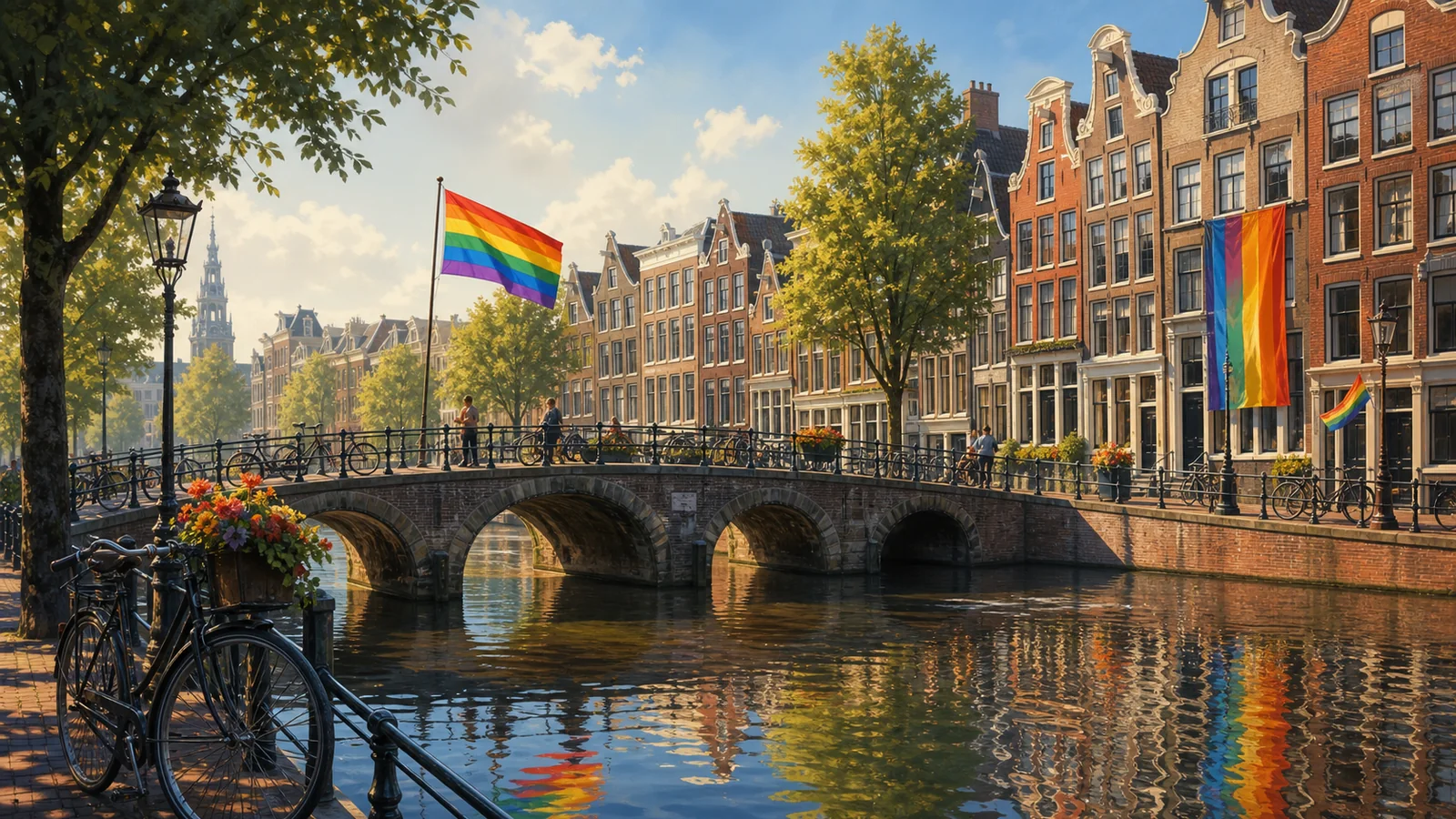
Pride Amsterdam Is More Than a Canal Parade
Every summer, Amsterdam becomes the setting for one of the city's most visible public events. Boats travel through the canals, cultural institutions organise exhibitions, public squares host concerts and discussions, and residents and visitors gather for Pride Amsterdam.
From outside the Netherlands, the event is often represented through its most colourful images. The Canal Parade, costumes, flags and crowded streets receive the greatest attention. However, these images show only one part of a much broader cultural and civic programme.
Pride Amsterdam can be approached as more than a celebration or political statement. It can also be examined as a historical, civic and educational phenomenon.
Why does Amsterdam organise its principal Pride activities at the end of July and beginning of August instead of exclusively in June? How is the event connected with the history and geography of the city? What can educators learn from the way Amsterdam uses its streets, canals, parks and museums to discuss identity, rights and public participation?
These questions allow us to approach Pride thoughtfully and critically, without expecting every person to hold identical views.
Why Amsterdam Pride Takes Place in Summer
In many countries, Pride activities are associated with June. This is largely because June commemorates the Stonewall uprising, which began in New York in June 1969 and became an important moment in the history of LGBTQ+ rights.
Amsterdam developed its own local tradition. The first Amsterdam Pride was organised in 1996, and the first Canal Parade took place on 3 August that year. More than 45 boats and smaller vessels participated.
The parade was originally intended to take place only during the period leading to the 1998 Gay Games. It proved so successful that it developed into an annual Amsterdam event closely associated with the first Saturday in August.
The Netherlands also has a separate national tradition called Roze Zaterdag, or Pink Saturday. It has been organised since the late 1970s, normally takes place in June and moves between different Dutch host cities.
Amsterdam Pride developed differently. It combined visibility and advocacy with a city-wide public festival celebrating freedom and diversity.
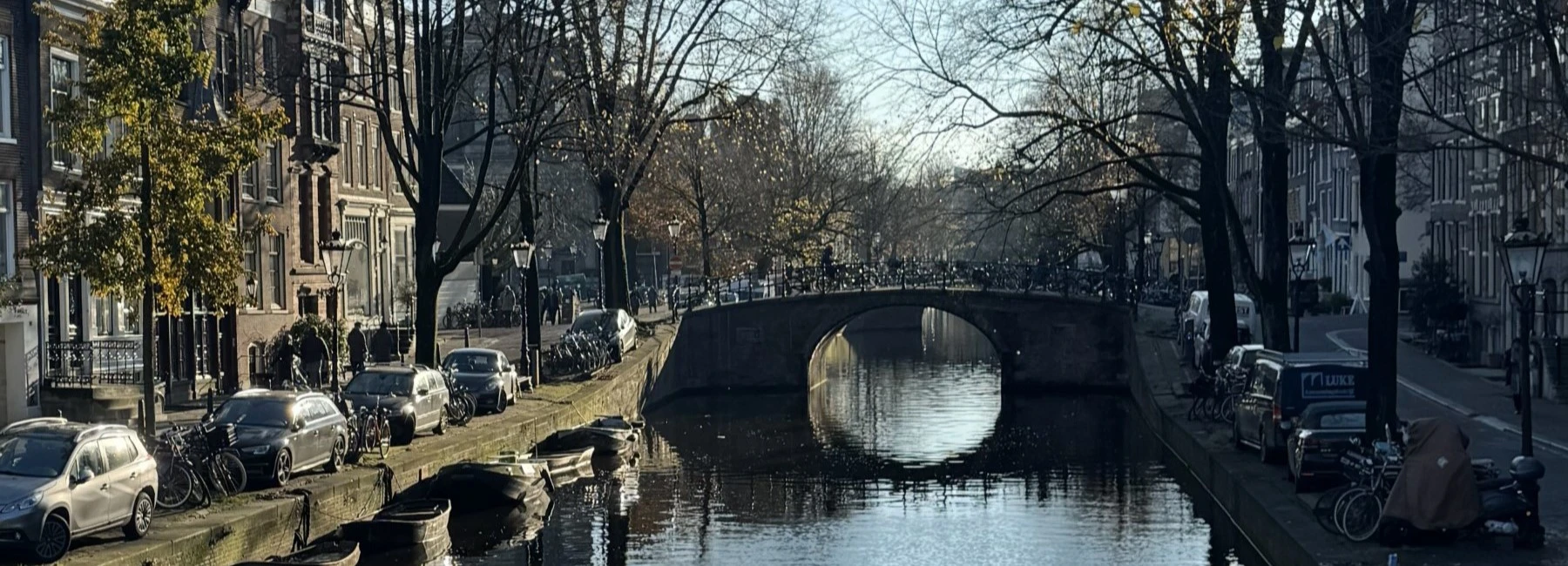
The canals helped give the event its distinctive character. While many cities organise a march through the streets, Amsterdam's most internationally recognised Pride event takes place on water.
The Canal Parade is therefore not simply a copy of Pride events elsewhere. It is a local expression shaped by Amsterdam's geography, public life and history.
Amsterdam and the Complicated History of Tolerance
Amsterdam is often described as a tolerant city. Its history as an international trading centre brought merchants, sailors, workers, religious minorities, refugees and migrants from different parts of Europe and the wider world.
However, the history of Amsterdam's tolerance is more complicated than its popular image suggests.
At different moments, the city accepted certain forms of difference while restricting others. Religious minorities could sometimes live and work in Amsterdam while being required to practise their faith discreetly. People could be tolerated without receiving complete equality or public recognition.
Amsterdam also experienced periods of exclusion, persecution and punishment. Tolerance was never automatic, unlimited or applied equally to every group.
This history helps us make an important distinction: tolerance does not necessarily mean agreement.
It does not mean that every person must approve of everyone else's beliefs, relationships or ways of life. At its most fundamental level, tolerance means recognising that people with different identities and convictions belong to the same society and are protected by the same legal framework.
This distinction can be useful when discussing Pride. A person may feel uncomfortable with particular expressions, disagree with a political position or follow a religious tradition with a different understanding of relationships and family life.
At the same time, that person can recognise the dignity, safety and legal rights of other people and their place in public life.
For educators, this creates space for meaningful discussion without accepting hostility, discrimination or compulsory personal agreement.
The Polder Model: Cooperation Without Complete Agreement
One of the best-known concepts associated with Dutch society is the polder model.
A polder is an area of low-lying land reclaimed from water and protected by dikes. The term is often explained through the Dutch experience of collective water management: communities with different interests still needed to cooperate because a failure to maintain shared infrastructure could affect everyone.
In modern public life, the polder model generally refers to consultation, negotiation and compromise. It is especially associated with cooperation among government, employers, trade unions and other social groups.
Its purpose is not to make everyone think in the same way. It is to find arrangements that allow people with different interests and convictions to continue functioning together.
This offers an interesting perspective on Pride Amsterdam.
Not every resident participates in Pride, and not everyone supports every message, symbol or form of expression connected with it. At the same time, residents, businesses, community organisations, visitors, transport providers, police and public authorities share the city.
They must negotiate the use of streets, canals, parks and public squares while considering safety, noise, transport, accessibility, freedom of expression and the rights of local residents.
The polder model does not remove disagreement. It offers a way of managing disagreement while protecting a shared civic space.
Pride Across Amsterdam's Neighbourhoods
Pride Amsterdam is not confined to one isolated neighbourhood. Its programme reaches different parts of the city, and each location carries its own historical and cultural meaning.
Dam Square and the Historic Centre
Dam Square has long served as a setting for ceremonies, demonstrations, celebrations and important public gatherings. The WorldPride Walk began here on 25 July 2026 before continuing towards Vondelpark.
Giving Pride a place in the historic civic centre makes the event publicly visible rather than placing it at the margins of the city.
Nearby Nieuwmarkt and Zeedijk provide another historical setting. Nieuwmarkt developed near Amsterdam's former port and is now close to the city's Chinatown. Zeedijk has longstanding connections with sailors, international visitors, nightlife and LGBTQ+ meeting places.
Spui and Spuistraat
Visitors sometimes confuse Spui with Spuistraat, but they are different places.
Spui is a small square surrounded by bookshops, cafés, university buildings and cultural spaces. Close to it is the Begijnhof, a centuries-old courtyard connected with a community of religious women who lived together while maintaining a degree of independence.
During the 1960s, Spui also became associated with the Provo movement, which used creative public actions, humour and protest to challenge established authority.
Spuistraat, the nearby street, has its own history of alternative culture, squatting, art and nightlife. During WorldPride 2026 it forms part of the street-party programme.
This compact part of Amsterdam demonstrates how religious history, literature, political protest, university life, tourism and nightlife can occupy the same urban environment.
Westermarkt and the Jordaan
Westermarkt is situated beside the Westerkerk and close to the Anne Frank House. It is also the location of the Homomonument .
Formed from three large pink granite triangles, the monument commemorates lesbian and gay people who experienced persecution and draws attention to continuing discrimination.
Its location creates connections between different histories of persecution, remembrance, resistance and responsibility. It can be particularly meaningful for teachers working with history, citizenship or memory education.
The area invites valuable questions:
- How do cities decide what should be remembered?
- Why are monuments placed in particular locations?
- How can a monument connect past suffering with present responsibilities?
- How can different histories coexist within the same public space?
Reguliersdwarsstraat
Reguliersdwarsstraat is one of Amsterdam's best-known LGBTQ+ streets. Located close to Rembrandtplein and the historic canal belt, it contains restaurants, cafés, clubs and bars and becomes a prominent location during the Pride street parties.
It is not a separate district removed from everyday city life. It exists alongside offices, shops, cultural institutions and residential streets. Its location illustrates how different communities and forms of city life exist close to one another.
Vondelpark and Museumplein
Vondelpark hosted Pride Park at the opening of WorldPride 2026. Its programme included performances, sport, information, community organisations and activities for different groups.
Nearby Museumplein is surrounded by major cultural institutions, including the Rijksmuseum, Van Gogh Museum, Stedelijk Museum and Concertgebouw. During WorldPride it becomes an important location for concerts, public activities and the closing programme.
Using Museumplein connects WorldPride with one of the principal cultural spaces of the Netherlands. It also raises questions about how museums and cultural institutions participate in contemporary public discussions.
Amsterdam-West and Mercatorplein
Not every Pride activity takes place inside the historic tourist centre. The WorldPride Open Air Film Festival is held at Mercatorplein in Amsterdam-West.
This part of the city is home to residents with many cultural, linguistic and religious backgrounds. Bringing cultural events into different neighbourhoods does not automatically resolve disagreements about identity, religion, family and public expression, but it makes these conversations part of local civic life.
WorldPride Amsterdam 2026
In 2026, Amsterdam is hosting WorldPride for the first time. The programme includes hundreds of cultural, community, educational and public activities under the theme UNITY.
Major scheduled activities include:
- Pride Walk and Pride Park on 25 July;
- the Open Air Film Festival at Mercatorplein on 29 and 30 July;
- the Senior Pride Concert at Nieuwmarkt on 30 July;
- street parties on 31 July and 1 August;
- the Canal Parade on 1 August;
- the WorldPride Human Rights Conference from 5 to 7 August;
- the WorldPride March and closing programme on 8 August.
The complete calendar contains many additional exhibitions, performances, workshops, debates and community meetings.
Consult the official WorldPride Amsterdam schedule for current times, locations and accessibility information.
What Can Teachers and Educators Learn?
Pride can be a sensitive subject in schools and adult education. Teachers may work with learners and families who hold strong religious or cultural beliefs. Some learners may identify personally with the subject, while others may feel uncomfortable discussing it.
The role of education is not to force personal agreement. It is to help learners understand society, examine evidence, communicate respectfully and recognise the dignity, safety and legal rights of other people.
Understanding Is Not the Same as Agreement
A learner should be able to explain why Pride exists, how it developed and what its participants are seeking without being required to agree personally with every aspect of it.
This principle applies to many complex subjects. Learners study political ideologies without adopting them, examine religions without converting to them and investigate historical conflicts without supporting every participant.
The same academic standard can be applied to Pride.
Rights Develop Through Historical Processes
WorldPride Amsterdam 2026 coincides with 25 years since the Netherlands became the first country to open civil marriage to same-sex couples. This provides a useful case study in legal and social change.
Learners can investigate how laws are proposed, debated and approved. They can compare developments in different European countries and examine the roles played by parliaments, courts, religious institutions, campaign organisations and public opinion.
This turns the subject into a broader study of democracy, law and citizenship.
Freedom and Responsibility Belong Together
Discussions about Pride frequently focus on freedom: freedom of expression, freedom of assembly, freedom of religion and freedom to live according to one's identity.
Freedom also exists alongside responsibility. Public events must consider safety, accessibility and local residents. Teachers should allow meaningful discussion while preventing bullying. Learners can express disagreement, but disagreement must not become an attack on the dignity or safety of classmates.
A mature classroom does not ignore these tensions. It gives learners the vocabulary, evidence and structure needed to examine them responsibly.
A City Learning to Live With Difference
Pride Amsterdam is many things at the same time. It is a celebration, a public demonstration, a cultural programme, a tourist attraction, a commercial event, a human-rights platform and a collection of community activities.
It should not be reduced to one image or message.
Placed within Amsterdam's history, Pride becomes part of a longer conversation about visibility, tolerance, freedom and the use of shared public space.
People do not need to hold identical convictions to maintain the society they share. They do need legal protections, structures for dialogue and a willingness to recognise one another as members of the same community.
For teachers and educators, this may be the most valuable lesson Amsterdam Pride offers.
Education should not pretend that social disagreements do not exist. Nor should it turn every disagreement into a conflict between enemies. It should help learners develop the knowledge, judgement and communication skills needed to live in a diverse democratic society.
This does not mean removing personal beliefs from the classroom. It means learning how to hold those beliefs while respecting the dignity, safety and rights of others.
Official Information and Further Reading
Learn in Amsterdam
Experience Amsterdam as a Learning Environment
Explore professional development courses that connect practical learning with international exchange and the cultural life of the city.