Understand key concepts and current perspectives
Explain the main ideas, opportunities and limitations connected to environmental education, climate literacy and action competence.

 Understanding Academy
Erasmus+ Courses for Teachers and Educators
Erasmus+ teacher training course

How can environmental learning become practical, hopeful and connected to daily life?
Turn environmental awareness into meaningful learning and local action.
Target group: Teachers, adult educators, school leaders, sustainability coordinators and other education professionals from all educational levels.
Climate change, biodiversity loss, pollution and resource use are connected challenges, but presenting them only through alarming information can leave learners feeling powerless. This course helps educators turn environmental knowledge into inquiry, participation and realistic action while maintaining accuracy and recognising the complexity of social and ecological systems.
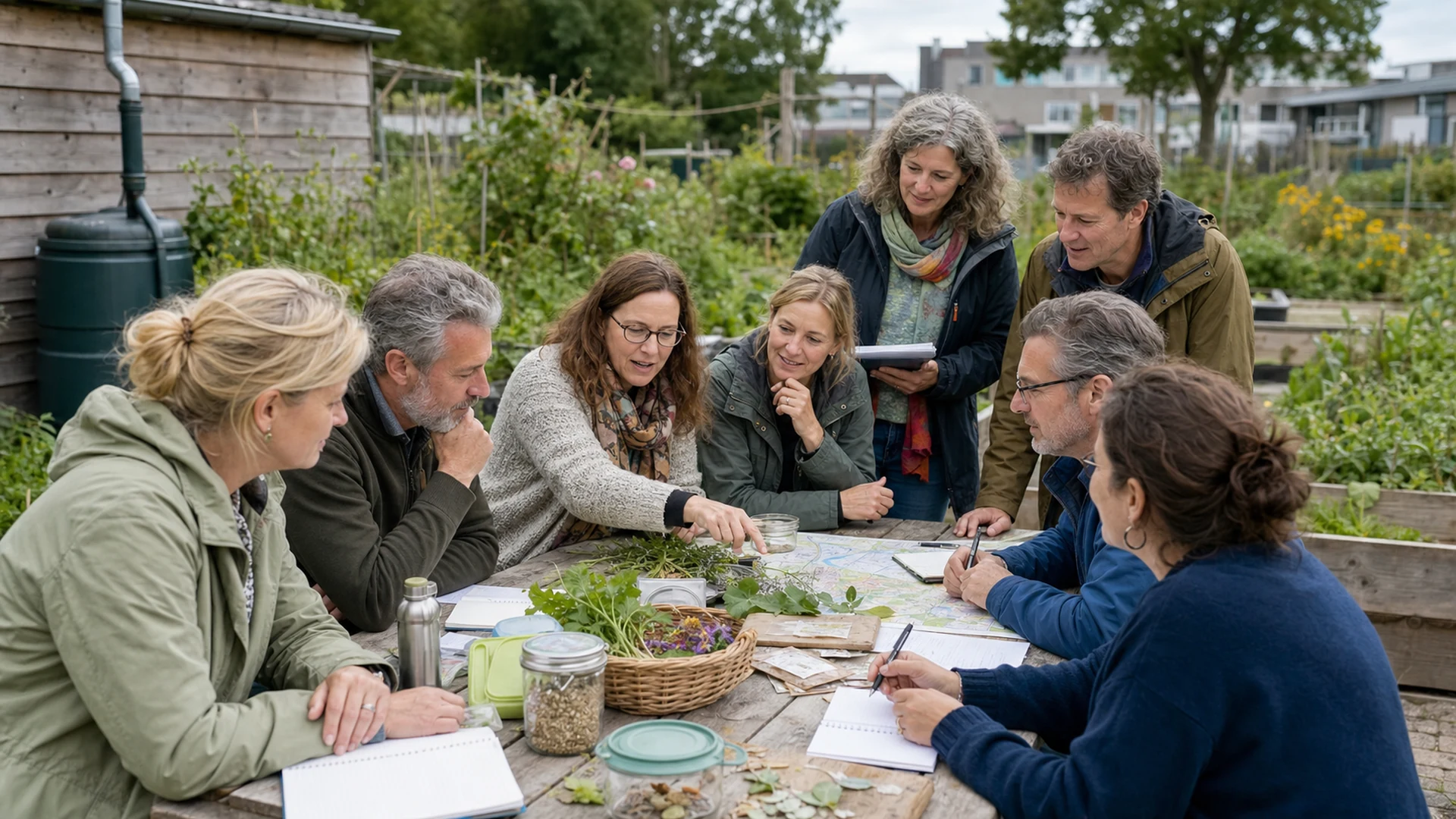
Participants explore systems thinking, environmental communication, local investigation and project design. They examine how sustainability can be integrated across subjects and educational levels rather than remaining isolated within science or special events. Practical activities address evidence, competing needs, learner agency, climate emotions and the difference between symbolic action and initiatives with a meaningful educational or community purpose.
The week leads to an environmental learning activity or action project that participants can adapt to their own learners and location, together with practical criteria for participation, reflection and evaluating what the initiative actually changes.
Learning outcomes
Explain the main ideas, opportunities and limitations connected to environmental education, climate literacy and action competence.
Identify strengths, barriers and development priorities in relation to environmental education, climate literacy and action competence in a real educational context.
Apply systems thinking, project design and local action planning through guided activities, collaborative tasks and structured reflection.
Create a classroom, team or organisational activity that can be adapted to participants’ own learners and setting.
Develop an achievable action that connects environmental awareness, participation and local relevance.
Six-day programme
Participants introduce their contexts, identify their goals and map current experiences connected to environmental education, climate literacy and action competence.
Participants build a common language through short inputs, pair dialogue and a visual question wall.
Participants analyse a short case or example and identify what they would keep, question or change.
Participants rotate through concise examples, models and tools connected to environmental education, climate literacy and action competence, recording practical possibilities.
Participants practise systems thinking, project design and local action planning in small groups with trainer guidance and structured prompts.
Participants capture what feels relevant, challenging or adaptable for their own learners and setting.
Small international groups work on an authentic challenge and apply selected tools in a purposeful task.
Participants develop a short activity, resource or approach, then improve it through testing and feedback.
Participants discuss different educational contexts and identify adaptations that make the work more realistic.
Participants examine a complex scenario, identify assumptions and consider inclusive, responsible responses.
Participants use structured dialogue to explore different learner, colleague and community perspectives.
Participants identify boundaries, risks and support strategies relevant to environmental education, climate literacy and action competence.
Participants create a classroom, team or organisational plan using systems thinking, project design and local action planning.
Participants share work-in-progress, ask focused questions and receive practical feedback from colleagues.
Participants revise their design for feasibility, inclusion and clear evidence of learning.
Course foundations
Completing the course
Learning is supported throughout the week through participation, reflection, practical activities and constructive feedback.
Learning approach
The course combines hands-on workshops, real-world examples, simulations, guided reflection and collaborative activities. Participants exchange good practices, work in international groups and develop ideas that can be adapted to their own professional context.
Optional cultural, social and networking activities support local engagement, intercultural learning and professional collaboration.
Before you travel
One week, normally comprising 25 academic hours.
Classes take place from Monday to Friday, in the morning or afternoon. Saturday is reserved for cultural activities.
The detailed timetable will be sent at least two weeks before the beginning of the course.
No special preparation is required unless stated in the course programme. Any required materials or equipment will be communicated before the course.
Participants who meet the attendance requirements receive a Certificate of Attendance.
The standard fee is €480. See what the course fee includes.
Alternative arrangements: Other course durations and schedules may be arranged on request.
Erasmus+ funding: Course fees and mobility costs may be supported through an eligible sending organisation's Erasmus+ grant. Eligibility and final funding decisions remain with the beneficiary organisation and its National Agency. Read our Erasmus+ KA1 funding guide.
Administrative support: Understanding Academy provides course programmes, learning outcomes, registration documentation and certificates. Participants and sending organisations remain responsible for transport, accommodation and grant management.
Plan your Erasmus+ mobility
Check the upcoming confirmed dates or register your interest. We will contact you with information about availability and the next steps.
Need funding information? Read our Erasmus+ KA1 funding guide.