Understand the foundations of meaningful discussion
Explain the conditions that help people participate, listen, ask questions and exchange different perspectives.




 Understanding Academy
Erasmus+ Courses for Teachers and Educators
Erasmus+ teacher training course

How can simple, engaging activities help people speak openly, listen carefully and explore different points of view?
Inclusive Dialogue, Multiple Perspectives and Better Group Decisions
Target group: Teachers, school leaders, trainers, facilitators, adult educators, organisational teams and other education professionals from all educational levels.
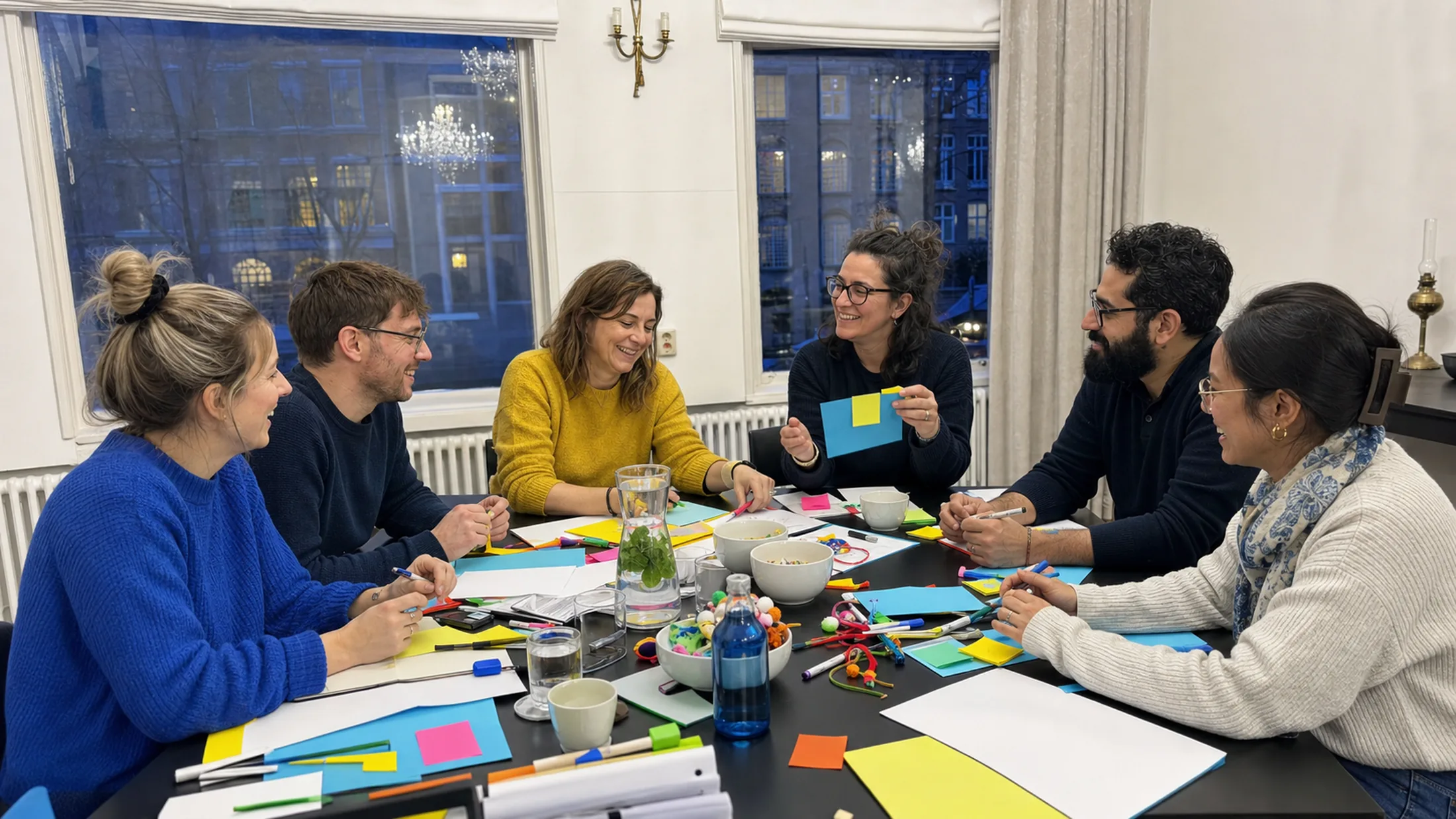
This professional development course explores how educators and facilitators can create discussions in which people feel able to contribute, question ideas and respond to disagreement constructively. Participants experience a wide range of practical activities designed to encourage curiosity, listening, participation and thoughtful exchange.
The course focuses on adaptable methods rather than one fixed facilitation model. Through simulations, creative challenges, international exchange and guided reflection, participants learn how to choose discussion formats that suit different learners, subjects, teams and cultural contexts.
By the end of the course, each participant will have created a practical discussion activity or facilitation plan for their own setting. They will also leave with original tools for gathering perspectives, balancing participation, exploring disagreement and supporting groups in making better-informed decisions.
Learning outcomes
Explain the conditions that help people participate, listen, ask questions and exchange different perspectives.
Identify who speaks, who remains less visible and which group conditions may make participation easier or more difficult.
Discover, apply and discuss different strategies and activities
Guide discussions in which participants can challenge ideas, express uncertainty and explore tension without personalising conflict.
Use structured activities to compare options, identify shared priorities and make group decisions more transparent.
Six-day programme
Creating the conditions for discussion
Participants introduce their educational contexts, identify personal learning goals and reflect on their current experience of leading discussions.
Participants explore the conditions that encourage or discourage contribution, including trust, language confidence, group size, time, status and fear of making mistakes.
Inviting different perspectives
Participants physically position themselves in response to a question, statement or scenario, explain their reasoning and reconsider their position after listening to others.
Small groups examine a case and identify whose experience, knowledge or point of view may be absent from the conversation.
Participants transform closed, leading or confrontational questions into questions that encourage explanation, reflection and dialogue.
Participants practise listening, accurately summarising and building on another person’s contribution before introducing their own view.
Groups explore how tone, wording and assumptions can influence whether a contribution opens or closes discussion.
Participation and group dynamics
Participants observe a simulated discussion and visually record patterns such as speaking time, interruptions, questions, support and idea development.
Participants experiment with roles such as questioner, connector, summariser, evidence checker, perspective seeker and participation observer.
Groups examine realistic situations involving silence, dominant voices, disagreement, language barriers and unequal confidence.
Participants compare different ways of making decisions, including individual responsibility, consultation, voting, consent and shared agreement.
Groups identify areas of agreement, unresolved questions, important differences and points requiring further evidence.
Course foundations
Completing the course
Learning is supported throughout the week through participation, reflection, practical activities and constructive feedback.
Learning approach
The course combines hands-on workshops, real-world examples, simulations, guided reflection and collaborative activities. Participants exchange good practices, work in international groups and develop ideas that can be adapted to their own professional context.
Optional cultural, social and networking activities support local engagement, intercultural learning and professional collaboration.
Before you travel
One week, normally comprising 25 academic hours.
Classes take place from Monday to Friday, in the morning or afternoon. Saturday is reserved for cultural activities.
The detailed timetable will be sent at least two weeks before the beginning of the course.
No special preparation is required unless stated in the course programme. Any required materials or equipment will be communicated before the course.
Participants who meet the attendance requirements receive a Certificate of Attendance.
The standard fee is €480. See what the course fee includes.
Alternative arrangements: Other course durations and schedules may be arranged on request.
Erasmus+ funding: Course fees and mobility costs may be supported through an eligible sending organisation's Erasmus+ grant. Eligibility and final funding decisions remain with the beneficiary organisation and its National Agency. Read our Erasmus+ KA1 funding guide.
Administrative support: Understanding Academy provides course programmes, learning outcomes, registration documentation and certificates. Participants and sending organisations remain responsible for transport, accommodation and grant management.
Plan your Erasmus+ mobility
Check the upcoming confirmed dates or register your interest. We will contact you with information about availability and the next steps.
Need funding information? Read our Erasmus+ KA1 funding guide.