Frame meaningful learning challenges
Turn curriculum topics or professional priorities into authentic questions with a clear purpose, audience, context and achievable outcome.




 Understanding Academy
Erasmus+ Courses for Teachers and Educators
Erasmus+ teacher training course

How can learners move from asking better questions to creating something meaningful with others?
This practical Erasmus+ course helps educators integrate the 4Cs into lessons, projects and learner-centred activities through hands-on methods.
Target group: Teachers, adult educators, trainers, curriculum coordinators, school leaders, professionals who design or facilitate learning and other education professionals from all educational levels.
This practical course explores how educators can connect subject knowledge with transferable skills through meaningful challenges, purposeful dialogue, collaborative creation and reflection. Rather than treating creativity, critical thinking, communication and collaboration as separate boxes, participants examine how these abilities interact during real learning.
Through design studios, practical experiments and peer feedback, participants develop an inclusive learning sequence with a clear purpose, authentic audience and observable evidence of learning. The course emphasises professional judgement, learner agency, accessibility and adaptation rather than fixed formulas.
Learning outcomes
Turn curriculum topics or professional priorities into authentic questions with a clear purpose, audience, context and achievable outcome.
Combine investigation, reasoning, creative development, communication and shared responsibility within coherent tasks rather than isolated skill exercises.
Use original participation structures, listening practices, decision processes and feedback approaches that help diverse learners contribute meaningfully.
Identify observable evidence of thinking, contribution, revision and application while using assessment to support progress rather than merely judge the final product.
Develop, peer-test and refine an original learning experience that is inclusive, feasible and adaptable to participants’ educational settings.
Six-day programme
Participants compare several independently written learning scenarios and identify how purpose, relevance, audience, choice and evidence influence learner engagement.
Participants map their learners, curriculum priorities, available time, access needs and local opportunities to define realistic design conditions.
Participants transform a familiar topic into an open but manageable challenge with a driving question, an authentic purpose and clear boundaries.
Participants develop a sequence of factual, interpretive, evaluative and generative questions, then examine how each type changes the direction and depth of learning.
Teams examine conflicting claims, incomplete information and uncertain sources, explain what they can responsibly conclude and identify what requires further investigation.
Participants use evidence to make and justify a decision for a defined audience while acknowledging limitations, alternatives and possible consequences.
Participants practise paraphrasing, clarifying and building on another person’s contribution before introducing their own position.
Teams redesign a group task so that responsibility, expertise and decision-making are genuinely shared rather than divided into disconnected pieces.
Participants test concise feedback structures focused on purpose, evidence, usefulness and the next possible revision.
Participants generate contrasting possibilities through changes in perspective, audience, materials and constraints before selecting an idea for further development.
Small groups respond to the same challenge under different time, resource, access or audience conditions and compare how the constraints influenced their decisions.
Participants create a low-cost first version of a product, explanation, service or learning experience and test whether it communicates the intended purpose.
Participants examine whose knowledge, language, confidence and access are supported by their design and revise barriers to meaningful participation.
Participants identify appropriate evidence of questioning, reasoning, contribution, creation, feedback, revision and transfer, then draft simple success indicators in their own words.
Participants adapt the same challenge for a different age group, subject, organisation or resource level and determine what must remain consistent and what should change.
Course foundations
Completing the course
Learning is supported throughout the week through participation, reflection, practical activities and constructive feedback.
Learning approach
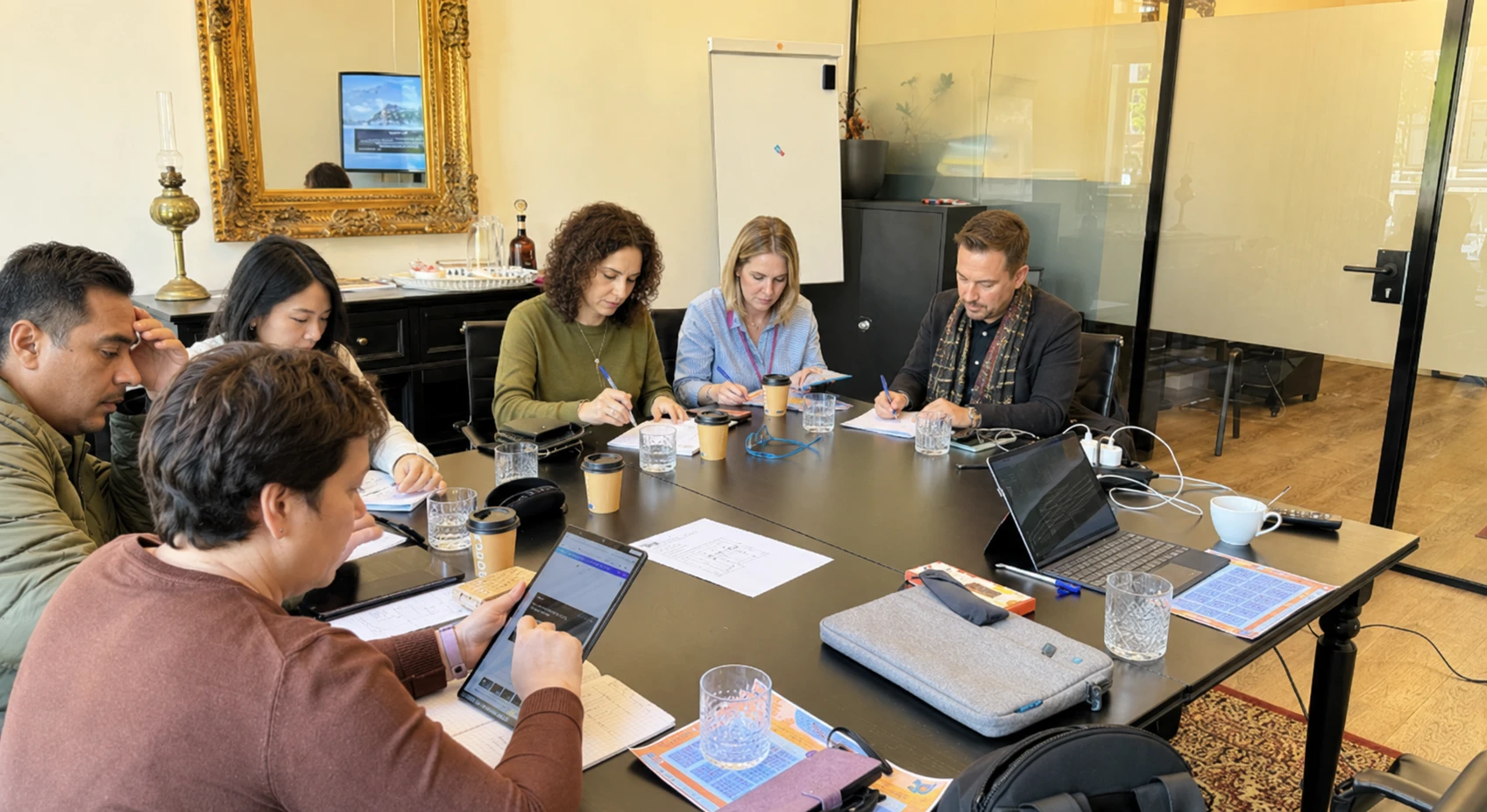
The course combines hands-on workshops, real-world examples, simulations, guided reflection and collaborative activities. Participants exchange good practices, work in international groups and develop ideas that can be adapted to their own professional context.
Optional cultural, social and networking activities support local engagement, intercultural learning and professional collaboration.
Before you travel
One week, normally comprising 25 academic hours.
Classes take place from Monday to Friday, in the morning or afternoon. Saturday is reserved for cultural activities.
The detailed timetable will be sent at least two weeks before the beginning of the course.
No special preparation is required unless stated in the course programme. Any required materials or equipment will be communicated before the course.
Participants who meet the attendance requirements receive a Certificate of Attendance.
The standard fee is €480. See what the course fee includes.
Alternative arrangements: Other course durations and schedules may be arranged on request.
Erasmus+ funding: Course fees and mobility costs may be supported through an eligible sending organisation's Erasmus+ grant. Eligibility and final funding decisions remain with the beneficiary organisation and its National Agency. Read our Erasmus+ KA1 funding guide.
Administrative support: Understanding Academy provides course programmes, learning outcomes, registration documentation and certificates. Participants and sending organisations remain responsible for transport, accommodation and grant management.
Plan your Erasmus+ mobility
Check the upcoming confirmed dates or register your interest. We will contact you with information about availability and the next steps.
Need funding information? Read our Erasmus+ KA1 funding guide.