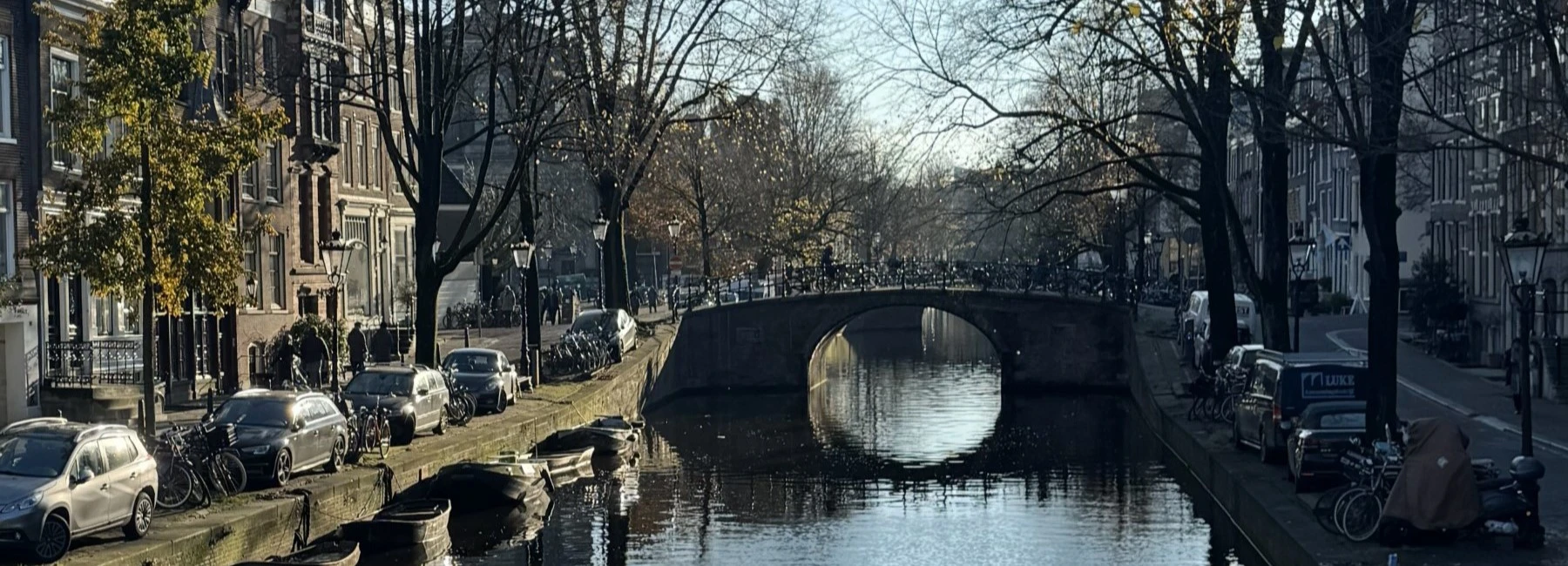


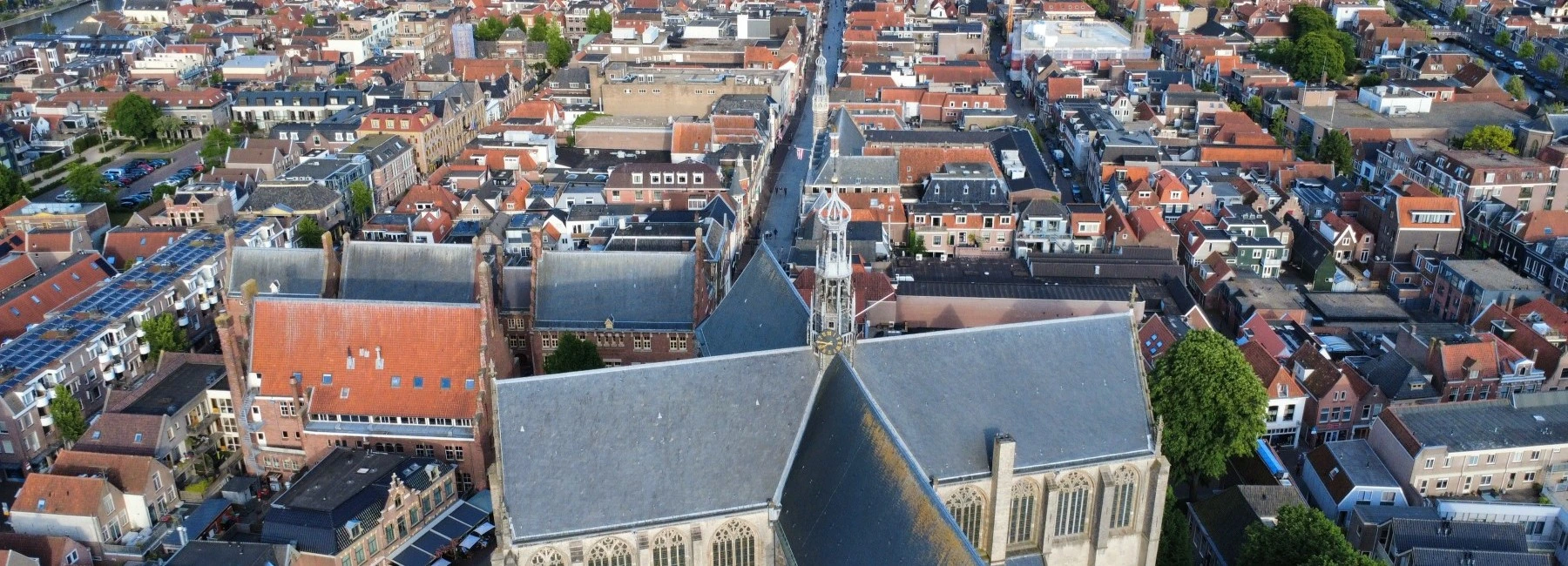

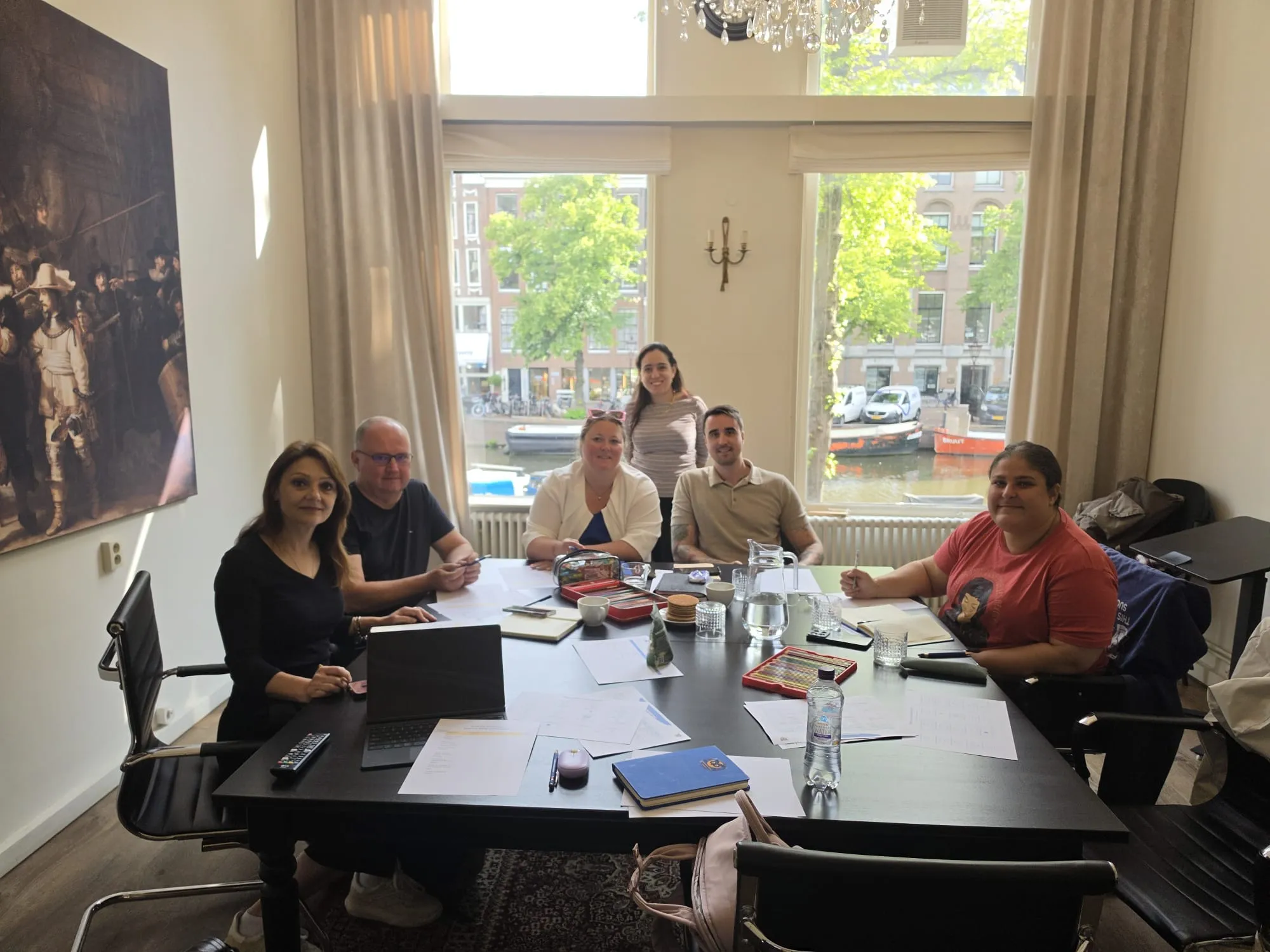
This was the central question guiding our one-week course, “Inspire, Innovate, Educate: Integrating Creativity into Teaching,” held in Amsterdam last week. The course brought together educators from different regions of France and Italy, each arriving with their own experiences, educational contexts, teaching practices and professional experience and questions.
Throughout the week, we explored creativity not simply as artistic expression, but as a fundamental skill for learning, teaching and responding to change. We discussed academic concepts, examined international practices, tested educational tools, reflected on our own classrooms and created practical plans for introducing more purposeful creativity into different subjects.
The course was not about encouraging teachers to add more colourful activities to their lessons. It was about understanding how creativity can help learners think, question, connect, solve problems and participate more actively in their own education.
Creativity Is More Than Art
When people hear the word creativity, they often think about drawing, painting, music, drama or other forms of artistic expression. These are valuable expressions of creativity, but they represent only part of the concept.
Creativity is also involved when we identify a problem, consider different perspectives, connect ideas that initially appear unrelated, test a possible solution or adapt our approach when something does not work.
This understanding is particularly important in the times in which we are living. Schools, organisations and communities are facing new and complex challenges. Some of these challenges are technological, while others are social, environmental, cultural or emotional. Many of them cannot be solved by repeating the same answers that worked in the past.
New problems require new questions, new perspectives and new solutions.
For this reason, creativity cannot remain an optional extra or an activity reserved for a few subjects. It needs to be recognised as a skill that learners can develop across the curriculum.
During the course, we discussed different academic concepts, papers and educational ideas related to creativity. However, our goal was not simply to collect theories. We continuously asked how these ideas could be translated into meaningful classroom practice.
What would creativity look like in mathematics, language learning, science, history or vocational education? How can a teacher encourage original thinking without losing structure? How can learners be given freedom while still receiving the support they need?
These questions accompanied us throughout the week.
Scaffolding as a Central Concept
One concept that we kept revisiting was scaffolding.
Creativity is sometimes presented as complete freedom: give learners an open task, allow them to use their imagination and see what happens. In reality, unlimited choice can be confusing or even intimidating. Learners may not know how to begin, what is expected of them or how to move from an initial idea to a finished result.
Creative freedom does not mean the absence of structure.
Effective scaffolding gives learners enough support to participate confidently while leaving enough space for choice, experimentation and personal interpretation. This support may include models, examples, guiding questions, visual organisers, sentence starters, planning templates, clearly defined stages or opportunities to practise one part of a larger task.
We discussed how scaffolding can change during a learning process. At the beginning, learners may need substantial guidance. Later, as they develop confidence and competence, some of that support can gradually be removed.
This balance is essential. Too little structure can create uncertainty. Too much structure can remove the possibility of genuine decision-making.
We therefore examined our own lessons and asked where learners may need additional support, where they may already be ready for greater independence and where our instructions may unintentionally limit creative thinking.
Scaffolding became a lens through which we analysed almost every methodology and activity presented during the course.
Comparing Different Approaches to Learning
We explored several educational approaches frequently associated with creativity, participation and active learning.
These included project-based learning, problem-based learning, inquiry-based learning and design thinking. We also examined related trends and methodologies, looking carefully at the similarities and differences between them.
Rather than presenting each approach as a fixed formula, we considered the purpose behind it.
In project-based learning, learners work towards the development of a final product, presentation, proposal or public outcome. The project creates a context in which knowledge and skills can be applied.
In problem-based learning, the learning process begins with a complex problem. Learners need to determine what they already know, what they still need to find out and how different forms of knowledge may help them respond.
In inquiry-based learning, questions, investigation and evidence become central. Learners are encouraged to observe, wonder, research, test and revise their ideas.
In design thinking, participants move through a human-centred process that may include understanding people’s needs, defining a problem, generating ideas, developing prototypes and testing possible solutions.
For each methodology, we considered the role of the learner, the role of the teacher and the relationship between the classroom and society.
Is the learner mainly receiving information, completing instructions or making meaningful decisions? Is the teacher acting as an expert, facilitator, mentor, designer or evaluator? Does the activity connect with a real need or audience, or is it only being completed for a grade?
These questions helped us move beyond labels. Calling something a project does not automatically make it learner-centred. Asking a question does not necessarily create genuine inquiry. Using the stages of design thinking does not guarantee that learners are considering real human needs.
The value of a methodology depends on how it is designed, facilitated and adapted to a particular context.
Moving from Theory to Classroom Planning
The course included many opportunities for participants to analyse their own classes and transform ideas into realistic plans.
We examined existing activities and considered how they could be made more creative, participatory or meaningful. Sometimes this involved changing the task itself. In other cases, a small change to the instructions, the available choices, the audience or the assessment process was enough to create a very different learning experience.
Participants also prepared lesson and activity plans for subjects outside their usual areas of expertise. This encouraged us to look at teaching from a new perspective and to focus on the learning process rather than relying only on familiar content.
Working across subjects also demonstrated that creativity is not limited to a particular area of the curriculum. It can appear in the way learners interpret historical evidence, represent a mathematical concept, explain a scientific process, develop a public campaign or propose improvements to their local environment.
Using Technology with Purpose
New technologies were another important part of our conversations; our discussions went beyond artificial intelligence and educational games.
We considered a broader question: What does technology genuinely add to the learning experience?
Technology can provide access to information, support collaboration, allow learners to create new forms of content, make abstract ideas more visible and connect classrooms with people and places beyond their immediate environment.
However, technology can also become a form of decoration. A digital tool may make an activity look modern without changing the quality of the learning taking place.
For this reason, we repeatedly returned to purpose.
Why are we using this tool? What can learners do with it that would otherwise be difficult or impossible? Does it increase participation, deepen understanding or provide useful choices? Does it support accessibility? Does it improve the learning process, or does it simply make the task more complicated?
Participants took part in tutorials and mentoring sessions in which they could explore tools according to their own interests and needs. This personalised format was important because not every technology is equally relevant to every teacher, subject or group of learners.
After exploring the tools, we shared what each person had found most useful. This exchange allowed participants to learn from one another and showed how the same tool could be adapted for very different educational settings.
Testing Understanding Academy’s Interactive Apps
During the course, we also tested and discussed different ways of using two Understanding Academy apps.
The first was Conversation Cards: Mystery Box , an interactive resource that presents unusual objects and uses them as starting points for conversation, imagination, reflection and creative thinking.
An apparently simple object can generate many different learning possibilities. Learners might describe it, invent a story around it, connect it to a historical event, explain how it could be improved, use it as a metaphor or propose an unexpected educational use for it.
The value does not come only from the object itself. It comes from the question, context and learning purpose created by the teacher.
The second tool was the Classroom Randomizer , which includes a spinner wheel and card picker. Random selection can introduce surprise, distribute participation, generate combinations or help learners move beyond their first and most predictable idea.
We discussed how randomisation can support creativity when it is used carefully. For example, learners might receive an unexpected audience, limitation, location, emotion, object or perspective that they need to include in a task.
At the same time, we considered when random selection may be inappropriate. Participation should not become uncomfortable or unsafe, and teachers still need to consider learners’ confidence, language level, access needs and personal circumstances.
Once again, the tool itself was not the methodology. The educational value depended on the decisions surrounding it.
Games for Memory and Idea Generation
The week also included many games and practical challenges designed to strengthen memory and support idea generation.
We created unusual associations, developed ridiculous story chains, experimented with memory palaces, observed changes in our surroundings and connected information with images, movements, sounds and personal experiences.
These activities reminded us that memory is not only about repetition. Information can become easier to remember when it is connected with emotion, humour, imagination, movement or an existing experience.
We also explored games for producing ideas. One difficulty learners often face is the belief that they need to find the perfect idea immediately. Creative games can reduce this pressure by making idea generation faster, more playful and less dependent on self-judgement.
Participants experimented with brainstorming strategies, unexpected combinations and changes of perspective. The goal was not to use every idea, but to create enough possibilities to make selection, improvement and development possible.
In creativity, quantity and quality are not always opposites. Producing several initial ideas may be exactly what allows a stronger idea to emerge.
Looking Beyond Our Own Educational Systems
One of the most appreciated parts of the course was the opportunity for participants to confirm that many of the practices they are already implementing are moving in a valuable direction.
Professional development is not only about being told what needs to change. It can also provide reassurance, language and evidence for practices that teachers have already developed through experience.
To support this comparison, we examined examples from schools in the United States. We looked at their examinations, assessment practices, rubrics and approaches to evaluating complex learning.
The purpose was not to present one system as superior to another. Instead, we compared and contrasted different approaches, asking what they valued, what they measured and what learners were expected to demonstrate.
We paid particular attention to rubrics and assessment tools that evaluate more than the final product. These can include criteria related to planning, collaboration, investigation, revision, communication or reflection.
Assessing creativity remains challenging. Teachers need to avoid rewarding only one aesthetic preference or treating originality as something completely subjective. Clear criteria can help learners understand that creativity may involve relevance, flexibility, development, connection, risk-taking or improvement, depending on the task.
International comparison allowed us to question familiar assumptions while also recognising the strengths already present in our own educational contexts.
Visiting Schools of Excellence Around the World
Each day, we virtually visited a school of excellence from a different part of the world.
Rather than simply admiring impressive buildings, technology or results, we tried to dissect each example.
What values appeared to guide the school? How was time organised? What kinds of spaces were available? What roles did learners and teachers have? How did the school connect with families, communities or real-world challenges? What appeared transferable, and what depended on a particular cultural, financial or social context?
This process was important because educational examples can easily become idealised. A successful practice cannot always be copied directly from one country or institution to another.
However, it can still inspire useful questions.
A different timetable may encourage us to reconsider how learning time is divided. A different classroom layout may prompt reflection on movement and collaboration. A strong community project may demonstrate how learners can contribute to society. An unusual assessment system may help us reconsider what counts as evidence of learning.
The goal was not imitation. It was informed adaptation.
Reflection as Part of Innovation
Last but not least, we reflected.
Reflection was not left until the final minutes of the course. It appeared throughout the week in discussions, planning activities, comparisons, mentoring conversations and personal notes.
Creativity and innovation require action, but they also require time to pause.
What did we notice? What surprised us? Which idea challenged our existing practice? What could realistically be introduced in our context? What support would learners need? What might go wrong? What would success look like?
Without reflection, professional development can become a collection of interesting activities that are quickly forgotten after returning home. Reflection helps participants connect ideas to their own learners, subjects, institutions and priorities.
By the end of the week, each participant had not only explored new methods but also identified practical paths for integrating creativity into their lessons.
A Week of Shared Learning in Amsterdam
The international character of the group brought an additional dimension to the experience.
Participants from different regions of France and Italy were able to compare educational systems, institutional expectations, classroom realities and professional concerns. Although contexts differed, many of the underlying questions were shared.
How can we prepare learners for an uncertain future? How can we maintain meaningful structure while allowing more independence? How can we use technology without allowing it to distract from learning? How can we recognise and assess complex skills? How can we continue developing our practice without feeling that everything we already do must be replaced?
The conversations, activities and moments of reflection demonstrated that creativity in education does not require abandoning knowledge, planning or academic rigour.
It requires us to think carefully about how knowledge is explored, applied, connected and communicated.
Creativity can be scaffolded. It can be practised. It can be reflected upon. It can be integrated into different subjects and adapted to different learners.
Most importantly, it can help education remain responsive to a changing world.
Our week in Amsterdam ended with new ideas, practical plans and greater confidence in the work already taking place in participants’ classrooms. The course provided a space to question, experiment, compare, play and reflect, but also to recognise the expertise that every participant brought to the group.
Innovation does not always begin with a dramatic transformation. Sometimes, it begins with a better question, a small change in a familiar activity or the decision to give learners a little more space to think.
That is where creativity becomes more than a concept.
It becomes part of teaching.
Develop creative teaching
Bring More Purposeful Creativity into Learning
Explore the complete creativity course programme or find an upcoming Erasmus+ professional development session.